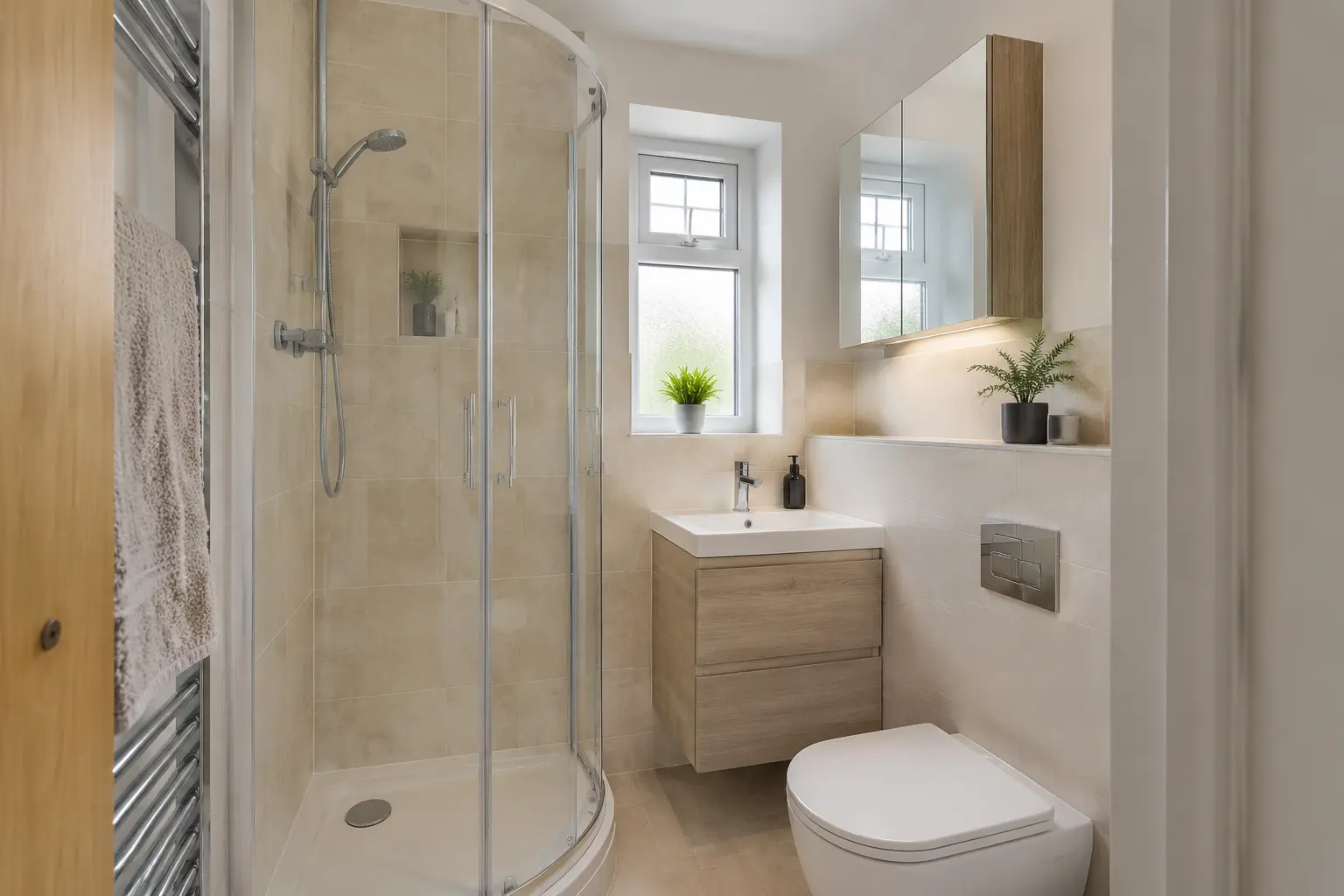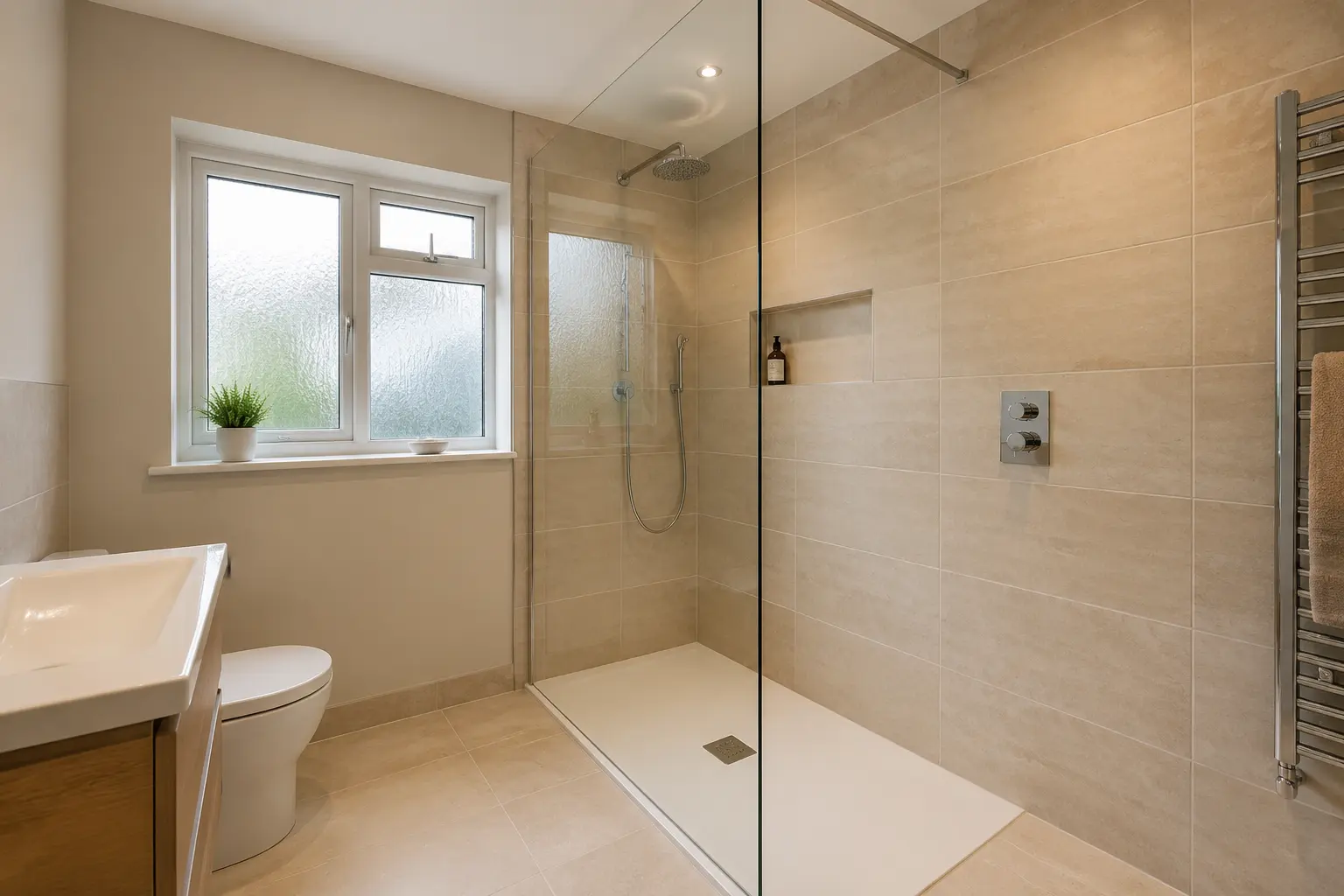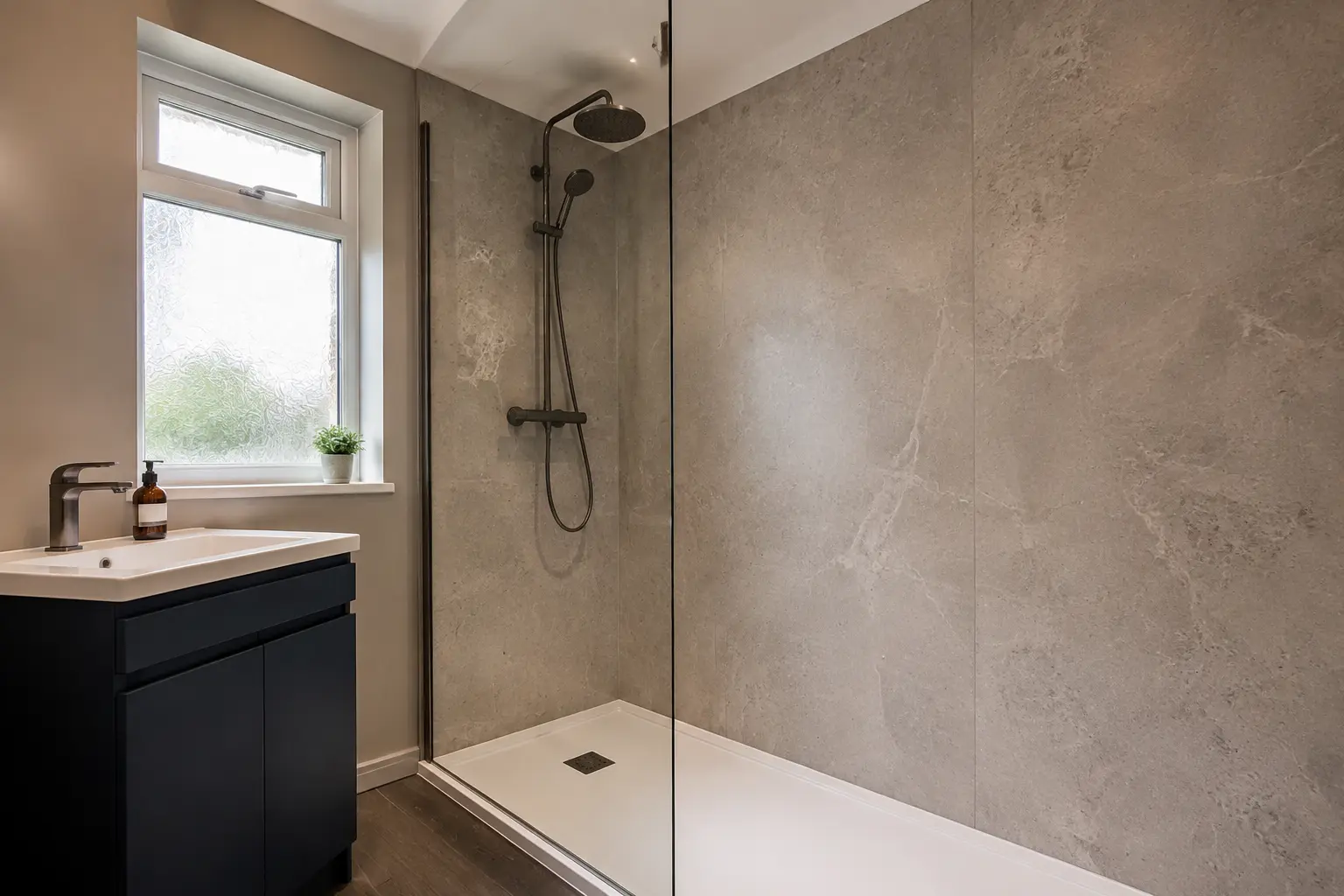
Choose the finish for the part of the room
Bathroom walls do not all face the same conditions. The wall inside a daily-use shower receives more direct water than a wall beside the door. Before comparing colours, decide which areas need a shower-suitable finish and which can use another treatment. This helps you compare products intended for the actual job.
Tiles and bathroom wall panels can both provide attractive finishes when the correct products are fitted properly. Neither choice removes the need to prepare the wall behind it. A showroom sample shows the surface, but not the corners, joints or fixing method. Ask how the whole finish will be installed in your room, including around the shower and bath.
What tiles offer
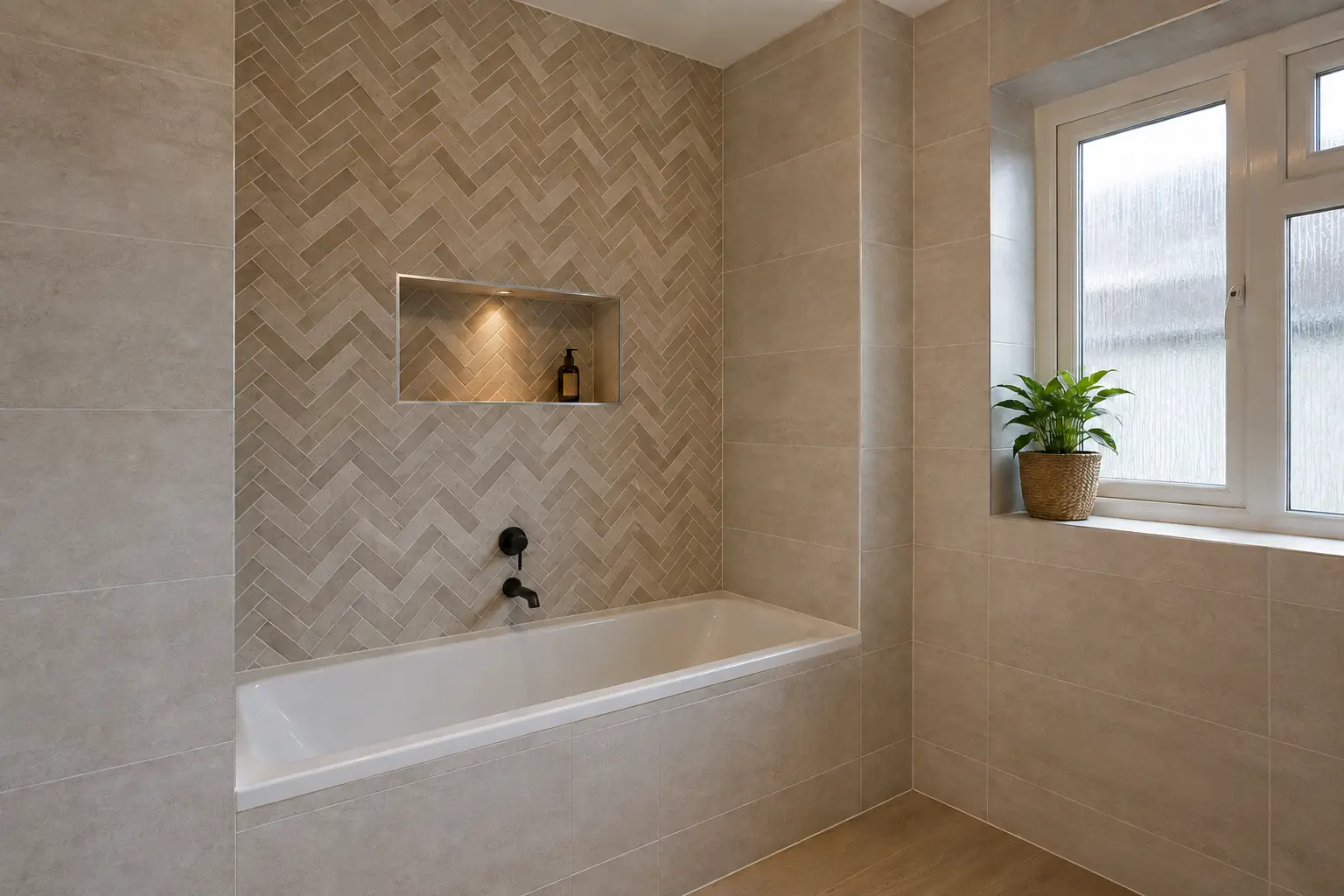
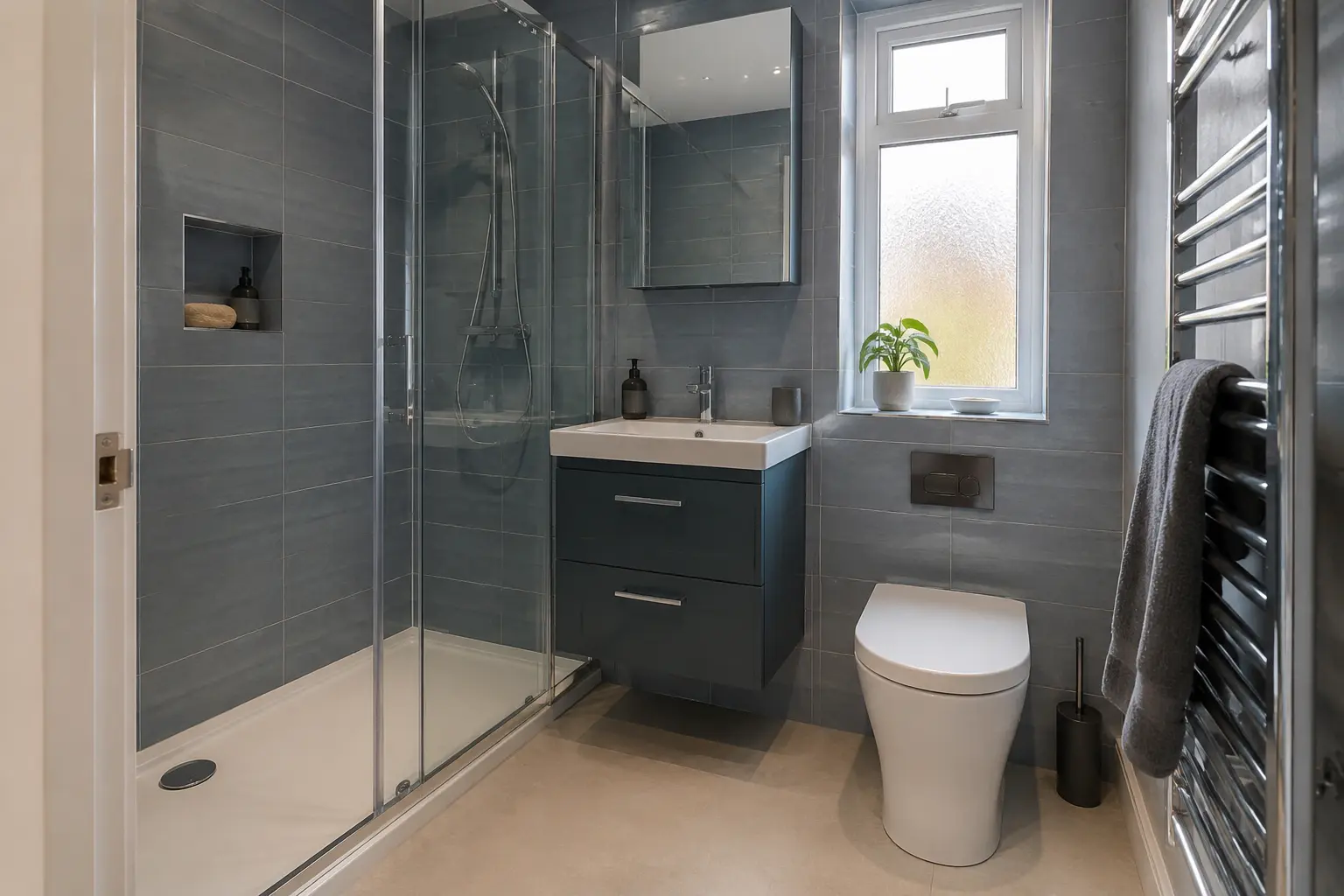
Tiles come in many sizes, colours and patterns. You can use a simple layout throughout or create a feature around a basin or shower. Smaller tiles can suit some shaped areas, while large tiles create fewer visible joints across a wall. The best size also depends on where the cuts will fall around the fittings.
Look at a proposed tile layout before ordering. A large tile can leave an awkward narrow strip at one edge if the wall dimensions are not considered. Patterned tiles may need careful alignment, and niches or window openings add cutting work. Ask whether trims, grout and the chosen pattern are included in the fitting price, rather than comparing the tile price alone.
What bathroom wall panels offer
Panels cover larger areas with fewer joints than many tiled layouts. Suitable systems can be useful where you want stone-effect or simple plain shower walls without lots of grout lines. Compare the actual sample, including its surface texture. A small image online may not show the pattern repeat or how the finish looks under bathroom lighting.
Ask which joint, corner and edge details go with the panel system. These parts affect the finished appearance and how the installation keeps water out. Panel sizes also affect waste and positioning around windows. Do not assume a panel can simply cover any existing wall: the fitter needs to check that the surface is sound and suitable for the chosen method.
Prepare the wall before covering it
Loose plaster, damp damage and movement need attention before either finish is installed. Covering a damaged wall can hide the problem without solving it. If the old finish is staying underneath, ask why it is suitable and whether the product manufacturer allows that installation. The answer should relate to the actual wall, not just the convenience of avoiding removal.
In a shower area, discuss the waterproofing behind and around the finish. Tiles and grout alone should not be treated as the whole waterproofing system. Panels also depend on correctly installed joints and connections. Ask how the bath or tray edge, pipe openings and corners will be finished, because these are places where water needs to be kept out.
Cleaning the finished walls
Tiles require cleaning across both the tile face and the grout joints. Panels generally have fewer joints, but they still need cleaning and care around edges and fittings. Neither option is maintenance-free. Soap, water marks and deposits can build up on either surface, depending on how the room is used and the local water.
Follow the care instructions for the exact product. Abrasive pads or strong cleaners can damage some surfaces and finishes. Test any recommended routine on the manufacturer’s advice rather than using the same cleaner for everything in the bathroom. Keeping the room ventilated and drying obvious splashes can help day-to-day care, but damaged seals or joints still need repair.
Price, fitting time and later repairs
Compare the complete installed cost. That includes preparation, waterproofing where needed, adhesive or fixings, trims, joints and labour. Tile patterns and small detailed cuts can add fitting time. Panels can cover an area quickly once it is ready, but awkward shapes or substantial wall repairs can still make the job more involved.
Ask how a damaged section would be repaired later. Keeping spare tiles can be useful, provided there is a suitable place to store them. With panels, the size and joining method affect replacement. Also consider access to concealed plumbing. It is sensible to discuss maintenance before the walls are finished, while access panels and removable fittings can still be planned.
Bring samples into your bathroom
View samples near your chosen furniture and floor finish, ideally in lighting similar to your bathroom. A warm cream panel can look different beside a cool white basin. Compare the scale of stone or timber patterns as well as colour. Avoid choosing solely from a tiny sample if the full panel or tile has a strong repeating design.
Our wall-panel service page explains the shower and bathroom areas to discuss; the tiling page covers tiled finishes. Include the room size, current wall finish and any known damage in your enquiry. The final choice should give you walls you like, a cleaning routine you can manage and an installation method that suits the room underneath.
For help with your own room, see bathroom wall panels in Ayr.
For an example of waterproofing beneath tiles, see Schlüter’s shower waterproofing guidance.